
Summer Readiness: Keeping Commissions Running During PTO Season
Automate Your Commission Process
GreenWave Newsletter
Smarter strategies to simplify commissions, eliminate errors, and stay in control.
Automate Your Commission Process
Find $100K+ Hiding in Your Commission Process.
PTO does not create fragile commission operations. It reveals them.
One lead is out. Another person is partially available. A corrected statement arrives late. A producer needs backup on a payout. Finance has a close question. And suddenly the whole process feels more dependent on specific people than anyone wanted to admit.
Before schedules get thin — run this straight test:
- uCan statements be normalized without the person who "knows the formats"?
- uCan Finance get close support without the person who "knows how to build the pack"?
- uCan agents get payment history answers without the person who "knows where everything lives"?
If any of those answers are uncomfortable, the process is carrying concentration risk — not just staffing risk. And concentration risk does not get better when summer schedules get thinner. It gets more visible.
For Commission Managers and COOs: the real summer-readiness question is not “are we covered?” It is “does the process run on documentation and design — or on memory and habit?” Because memory and habit take PTO.
What Breaks First During PTO Season
In most organizations the same failure points appear first: statement intake and normalization, exception routing, approvals and overrides, payment-history support requests, and deposit matching and close support for Finance.
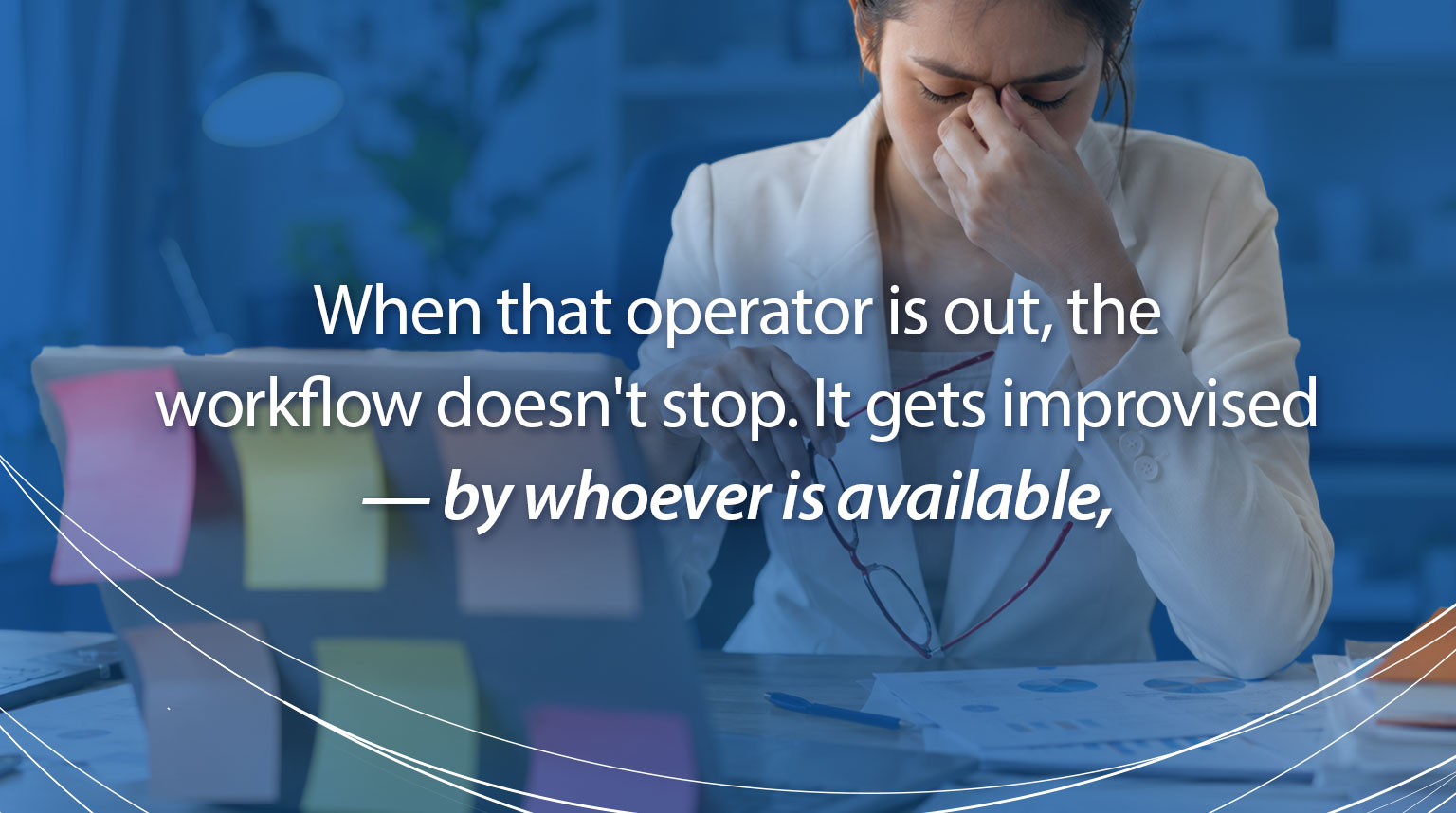
These are not random. They are the places where the workflow is typically held together by one operator’s judgment and access rather than by a documented, repeatable process. When that operator is out, the workflow doesn’t stop. It gets improvised — by whoever is available, working from incomplete context, doing their best with less information than the person who usually runs it.
That is how routine PTO creates avoidable friction. Not because summer is unusual, but because the process was never designed to run without specific people in specific seats.
The Real Issue Is Not Absence— It Is Dependency
PTO itself is not the risk. The risk is a workflow that depends on one person to: know where everything lives, understand how statement variations should be handled, remember which exception types matter most, explain prior-period changes quickly, and keep Finance supported at close without scrambling.
That is not resilience. That is concentration risk. And once you see it clearly, the solution becomes obvious: you do not solve summer-readiness by asking people to stay available. You solve it by reducing dependency.
A process built for continuity can be run by any qualified operator — not because it is simple, but because it is documented, visible, and designed so that the next person can pick it up without recreating everything from institutional memory.
The Summer CoverageChecklist
#1
Document the real workflow, not the ideal one.
Map how statements actually arrive, how they are normalized, how exceptions are tagged and routed, how approvals happen, how statements and history reach agents, and how close support reaches Finance. If any part of that workflow still lives “in someone’s head,” that is the first continuity risk.
#2
Name the top three key-person dependencies.
Every team has them. The goal is to surface them before PTO season magnifies them. What step depends on one operator’s judgment? What step depends on one operator’s access? What step depends on one operator’s memory? Those three questions identify the first places to add process, visibility, or automation.
#3
Standardize exception handling before schedules begin to get thin.
Exception queues become dangerous when nobody knows what should be handled first. Before summer, define: exception categories, ownership, escalation path, expected turnaround, and how decisions get documented. A clean exception workflow reduces the daily judgment the team has to recreate while people are in and out.
#4
Make prior-period history accessible without asking the usual person.
Summer coverage gets harder when the only path to a prior statement or payout detail is “ask the person who handled it.” If your team and your agents can access statement history, payment detail, and prior-period records without digging through someone’s email, the workflow keeps moving with less interruption. That is operational transparency — not just an agent experience feature.
#5
Prepare Finance close support before close week arrives.
Do not wait for the Controller’s question to reveal the gap. If PTO overlaps with close, make sure the close-support package is already easy to produce: a usable export, variance support, approval visibility, and a clear Expected → Actual → Deposit trail. That is what keeps Finance from inheriting the summer friction too.
What "Summer Ready" Actually Looks Like
A summer-ready commission process is not perfect. It is stable without specific people present.
That means: documented workflow, lower key-person dependency, accessible statement and payout history, defined exception routing, clean close support for Finance, and enough visibility that questions can be answered without recreating the process from scratch each time.
If those things are true, PTO season is manageable. If they are not, summer is a stress test you did not mean to schedule.
Why This Matters Before Q3
Summer is not just a staffing issue. It is a rehearsal.
If the workflow cannot absorb normal PTO — routine absences, partial availability, standard vacation overlap — it will struggle more during bigger volume windows: year-end push, seasonal surges, the Q3 growth phase. That is why smart organizations use early summer to reduce dependency risk. Not to “make it through June.” But to build a process that keeps working when both people and volume move at the same time..
BOOK A CALL TODAY!
If you want to know specifically where your commission process is most exposed during PTO season — before July makes it visible — Book A Call.
Here’s what you leave with:
- Your continuity exposure, sized — the specific dependencies, key-person risks, and workflow gaps that create the most fragility when schedules thin out, mapped for your operation
- Your top 3 fragility points identified — the workflow steps most likely to break during PTO and what each one costs when it does
- A fix-first plan with proof — the highest-leverage change before summer schedules get busy, with a redacted example of what a low-dependency commission process looks like in practice
If we’re not a fit — or we can’t spot a meaningful leak quickly — we’ll tell you. And you’ll still leave with clarity on what to fix first.
Not ready to book? Run the five checklist questions above with your team before schedules get thin. If two or more answers feel shaky, that is your starting point.
P.S. The teams that handle summer most cleanly are not the ones with the best coverage plans. They are the ones who reduced their dependency risk before they needed the plan.